How to Sell a Superfractor: 1/1 Net Proceeds Calculator
Compare Superfractor 1/1 selling scenarios with a neutral net proceeds calculator, then review identity, fees, custody, photos, and policy risks.
There is no universally best way to sell a Superfractor. A self-listed marketplace, specialist consignment, dealer offer, or in-person transaction can expose the same one-of-one card to different buyers, costs, rules, timelines, and custody risks. The defensible choice begins with the exact identity and current written terms—not a forum claim about which venue always pays the most.
Quick answer
Verify the card, document its condition, estimate value from completed transactions, and compare each eligible channel on expected net proceeds, buyer reach, control, payment and return rules, custody, and fulfillment. Use the two-scenario net proceeds calculator for the arithmetic, reopen every provider's current fees and policies before committing, and complete the transaction inside the chosen venue's permitted workflow.
Seven decisions hidden inside “Where should I sell it?”
| Decision | Evidence to record | What not to assume |
|---|---|---|
| Exact identity | Year, manufacturer, product, set or subset, card number, subject, attributes, Superfractor eligibility, and 1/1 marking | A seller title, grading label, or gold finish can fill an official-source gap. |
| Condition and certification | Front, back, edges, corners, surface, alterations, holder, grade, and certificate details when applicable | Raw means damaged, graded means authentic in every context, or a grade guarantees a premium. |
| Value evidence | Verified sold records, dates, formats, condition differences, and a stated confidence range | An active ask or one distant comparison establishes the sale price. |
| Sale channel | Eligibility, audience, control, current fees, payment flow, returns, disputes, custody, and timeline | The lowest advertised commission produces the highest net proceeds or lowest risk. |
| Listing format | Auction, fixed price, offer, direct offer, or consignment terms and the acceptable outcome range | Competition will appear during an auction or a high ask will attract the right buyer. |
| Fulfillment | Platform instructions, carrier eligibility, packaging, tracking, signature, declared value, insurance, and claim evidence | Buying a label or entering a declared value guarantees reimbursement. |
| Records and privacy | Your source, listing, transaction, expense, tax, custody, and delivery records | Buyer identity, address, payment data, or stale marketplace payload belongs in public provenance. |
Resolve the card before choosing a venue
A true Superfractor is the one-copy parallel for one exact eligible checklist identity. Complete the Superfractor identification worksheet before writing a listing. If the checklist, parallel eligibility, card number, subject, autograph, relic, variation, or 1/1 marking conflicts, keep the identity unresolved rather than promoting the nearest match.
Record the card's current state before it changes custody: clear front and back images, the serial marking, holder and certificate when present, visible defects, and any independent provenance that you are permitted to use. This record supports an accurate description; it is not a guarantee of authenticity, grade, condition, value, ownership, or future delivery.
Compare channels on the same fields
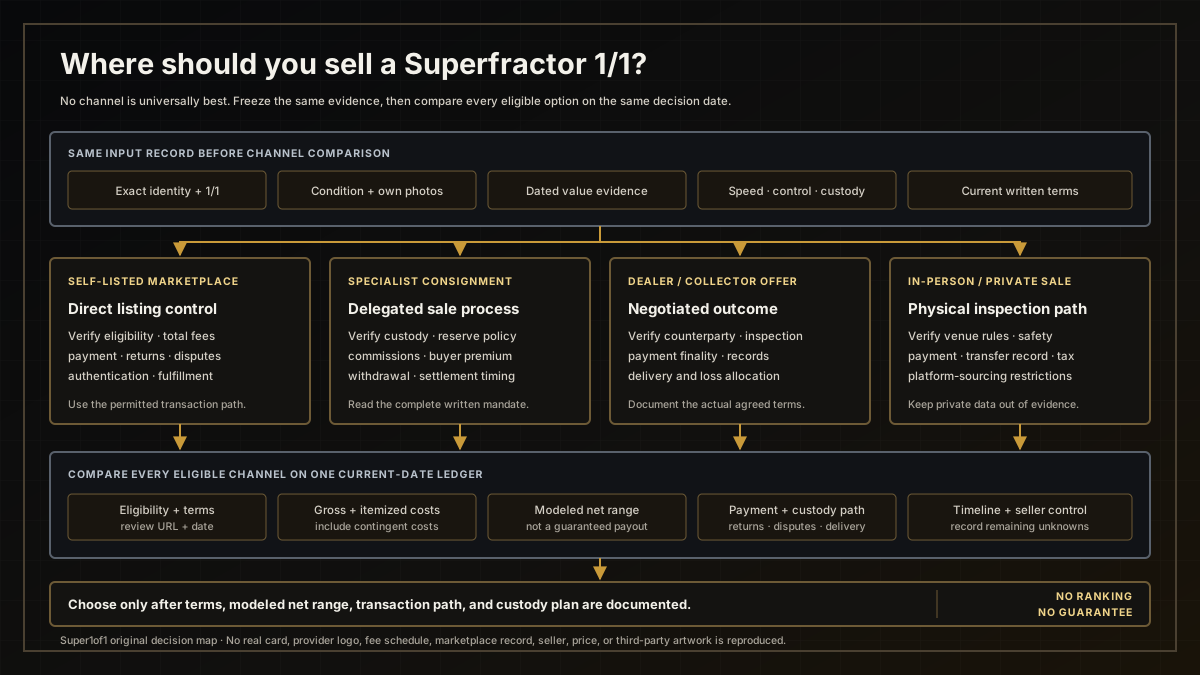
Freeze one decision-date record before comparing channels: the exact identity, current condition and original photos, dated value evidence, seller constraints, and each provider's current written terms. Then compare every eligible option on the same cost, payment, return, custody, fulfillment, timing, and control fields instead of ranking channels by one headline fee.
| Channel | Potential fit | Terms to verify before committing |
|---|---|---|
| Self-listed marketplace | The seller wants direct control over title, images, format, timing, offers, and fulfillment within the platform workflow. | Category and account eligibility, total fees, listing rules, payment holds, authentication routing, returns, disputes, seller protection, shipping, and payout timing. |
| Specialist consignment or auction | The seller values an established bidder audience and delegated cataloging, promotion, payment, or fulfillment. | Reserve and estimate policy, seller commission, buyer premium, unsold or withdrawal charges, insurance, custody, photography rights, settlement timing, and return or dispute allocation. |
| Dealer or collector offer | The seller prefers a negotiated transaction without waiting for a public listing cycle. | Counterparty verification, payment finality, inspection, documentation, tax records, delivery or meeting security, and which party bears loss before acceptance. |
| In-person show or private sale | Physical inspection and immediate discussion matter more than broad online reach. | Venue rules, personal safety, payment verification, transfer record, tax obligations, and whether any online platform sourced the buyer and restricts moving the transaction elsewhere. |
No row is an endorsement or risk score. A provider can change eligibility, fees, protections, and shipping instructions at any time. Compare live primary terms for the exact card, seller account, buyer location, and proposed transaction date.
Compare modeled net proceeds, not headline fees
Gross sale price and seller proceeds are different facts. Build the same current-cost ledger for every channel: seller commission or final-value fee, insertion and optional promotion charges, payment or currency costs, grading or vault release, outbound and return shipping, insurance or declared-value charges, consignment intake or withdrawal, taxes, and the cost allocation if a return or dispute occurs. A buyer premium may also affect bidding behavior even when it is not deducted from the seller's settlement.
For one live example of why screenshots become stale, eBay's selling-fee page says charges depend on price, format, category, optional upgrades, conduct, and performance. Read the current page for the actual account and category; Super1of1 does not reproduce or calculate provider fees.
The free calculator below compares two user-supplied scenarios. It can apply one flat percentage to the full modeled gross and subtract other known seller costs, but it cannot reproduce a tiered, capped, threshold-based, tax-inclusive, account-specific, or contingent provider schedule. When one rate does not apply to the full gross, enter zero for the flat rate and place the fee amount determined from the current provider terms under other known seller costs. Never turn one provider's example or one account's result into a universal rate.
Choose auction, fixed price, or direct offer deliberately
| Format | What the seller controls | Unknown that remains |
|---|---|---|
| Auction | Eligible venue, duration, opening bid, and any permitted reserve or buy-now option | How many qualified bidders will participate before the stated end time and where the final bid will land. |
| Fixed price with or without offers | Opening ask, permitted offer settings, and how long to wait or revise | Whether a buyer accepts, negotiates, or ignores the price. |
| Consigned auction or private sale | Which provider or counterparty to engage and which written mandate to accept | The provider's actual audience, bids, negotiated terms, and net settlement. |
| Dealer offer | Whether to request, reject, or accept a documented offer | The counterparty's resale margin and what a different channel might eventually produce. |
eBay's current pricing and format guidance distinguishes auction and fixed-price choices and points sellers to completed listings. Use the Superfractor valuation worksheet to control for identity, condition, timing, and transaction differences before setting an acceptable range. Neither an auction nor a fixed price guarantees a sale.
Write a listing that can survive inspection
Use a factual title built from the verified year, product, subject, set or subset, card number, named Superfractor parallel, 1/1 print run, and autograph, relic, rookie, or variation attributes only when they are supported. eBay's current search-manipulation policy prohibits unrelated or misleading keywords and tells sellers to use a clear title and appropriate category.
Describe the actual object and disclose visible defects or mismatches. eBay's current selling-practices policy requires condition and flaw disclosure and emphasizes photos of the item being sold. Its images, video, and text policy tells sellers to create their own descriptions and media and not copy manufacturer or web images without permission.
Minimum Superfractor photo record
- Full front and back, square to the camera and readable.
- Close view of the 1/1 marking, card number, autograph or relic language, and any identity-changing detail.
- Neutral-light views of corners, edges, surface, centering, print issues, and disclosed damage.
- Holder label and certificate details when graded, without treating the number alone as proof of an online item.
- No buyer address, payment information, private message, unrelated certificate, copied marketplace image, or manufacturer photo.
Follow the chosen platform's transaction path
Do not use a marketplace listing to find a buyer and then divert that buyer into a prohibited off-platform payment. eBay's current off-platform transaction policy prohibits that behavior and warns that the parties lose platform protections. The same-day rule check matters because another venue may define its workflow differently.
Never bid on your own card or arrange friendly bids to raise its price or apparent demand. eBay's current shill-bidding policy expressly prohibits bidding intended to inflate price, desirability, feedback, or search standing. Promote a listing only through methods the venue and destination community allow; do not spam groups, impersonate collectors, or purchase undisclosed links.
Plan custody and shipping before publishing
- Read the order path. Confirm whether the card goes to the buyer, an authenticator, a consignment facility, a vault, or another named recipient. eBay's current Authenticity Guarantee seller guidance shows how eligibility can change the ship-to party and inspection path.
- Check carrier eligibility and limits. Do not assume every service accepts a card at the proposed value. UPS, for example, lists articles of high or unusual value as restricted items accepted only under stated criteria.
- Follow current packaging instructions. Use a properly fitted card holder and team bag where suitable, immobilize the holder without crushing it, protect against moisture, and place it inside a rigid cushioned box. Compare the carrier's current guidance; USPS publishes a domestic package preparation guide and UPS publishes packaging requirements and tips.
- Preserve proof before tender. Record the card, holder, packaging stages, sealed parcel, label, weight, handoff receipt, and required tracking or signature. Do not publish the address or tracking number.
- Understand claim evidence. USPS's current domestic claims guidance requires proof of value and insurance and may require the damaged item and original packaging. Declared value, insurance coverage, and a paid claim are separate questions.
Keep private transaction records separate from public evidence
A seller may need private records for account, tax, insurance, provenance, dispute, or legal purposes. Preserve them under the applicable provider terms and local requirements, but do not publish buyer identity, address, payment data, private messages, tax records, or tracking details as card evidence.
A fresh official-API marketplace listing accepted by Super1of1 counts as a public sighting. An exact match contributes to the canonical card's seen coverage; an unmatched accepted item becomes a provisional observed card. When the listing expires, provider-controlled title, image, price, seller, and link fields are scrubbed while generic normalized sighting facts remain.
Reusable Superfractor sale plan
Complete this privately and reopen every linked policy on the decision date.
Exact identity and Superfractor eligibility:
Decision date:
Condition / holder / grade / disclosed flaws:
Value evidence and confidence:
Channels compared:
Current eligibility and terms URLs / review dates:
Auction, fixed price, offer, consignment, or direct-sale rationale:
Gross target / acceptable range / currency:
Itemized seller costs and possible return costs:
Expected net proceeds range:
Original photo and description checklist:
Payment, return, dispute, and protection rules:
Custody and authentication route:
Carrier eligibility / packaging / tracking / signature plan:
Declared value / insurance / claim-evidence plan:
Private records to retain:
Decision and unresolved questions:
What this worksheet does not do
Super1of1 does not broker sales, accept payment, hold cards, provide escrow, authenticate cards, appraise value, retrieve or calculate provider-specific fee schedules, recommend a marketplace or counterparty, guarantee a transaction, or provide legal, tax, insurance, investment, shipping, buying, or selling advice. External policy links are research sources, not endorsements or affiliate offers. The seller remains responsible for current terms, applicable law, safe custody, and the transaction.
Start with the identity worksheet, use the valuation worksheet for price evidence, follow the Superfractor shipping and custody guide before tendering the card, and use the grading worksheet only if third-party certification serves a defined goal. The canonical census remains limited to true Topps and Bowman baseball Superfractors from 2024 onward.
Original decision tool
Superfractor sale net proceeds calculator
Compare two user-defined sale scenarios on the same fields. Enter current terms from each eligible channel; the calculator stores nothing, predicts no sale price, and does not recommend a marketplace, auction house, consignor, dealer, or payment method.
What the comparison leaves unresolved
- The entered gross amounts are scenarios, not appraisals, offers, bids, or sale predictions.
- Taxes, buyer premiums, currency conversion, returns, chargebacks, disputes, damage, insurance recovery, unsold or withdrawal charges, and contingent costs remain outside the result unless you include a known seller-paid amount.
- A higher modeled net does not measure audience, probability of sale, timing, custody, payment finality, privacy, protection eligibility, or counterparty risk.
- Reopen the controlling provider and transaction terms before committing; do not reuse a saved result after fees, eligibility, or circumstances change.