How to Ship a Superfractor or 1/1 Sports Card Safely
Ship a Superfractor or 1/1 sports card with receiver-specific packing, current carrier checks, private custody records, and claim-ready evidence.
Shipping a Superfractor is a custody transfer involving an irreplaceable exact card, not merely a parcel with a high declared value. A defensible plan preserves the card's identity and pre-shipment condition, follows the actual recipient's instructions, checks the carrier's current written acceptance and coverage terms, prevents movement without adding pressure, and keeps a private record from packing through delivery or claim.
Quick answer
Freeze the exact card identity and condition before packing. Confirm the named recipient and any receiver-specific holder or routing instructions. Immobilize the protected card inside a strong outer box without crushing it, then choose a currently eligible service whose written tracking, signature, value, coverage, and claims rules fit the shipment. Preserve private photos, receipts, acceptance records, and delivery events. Declared value, tracking, signature, marketplace authentication, and package photos each answer different questions; none alone proves card identity, condition, ownership, or guaranteed reimbursement.
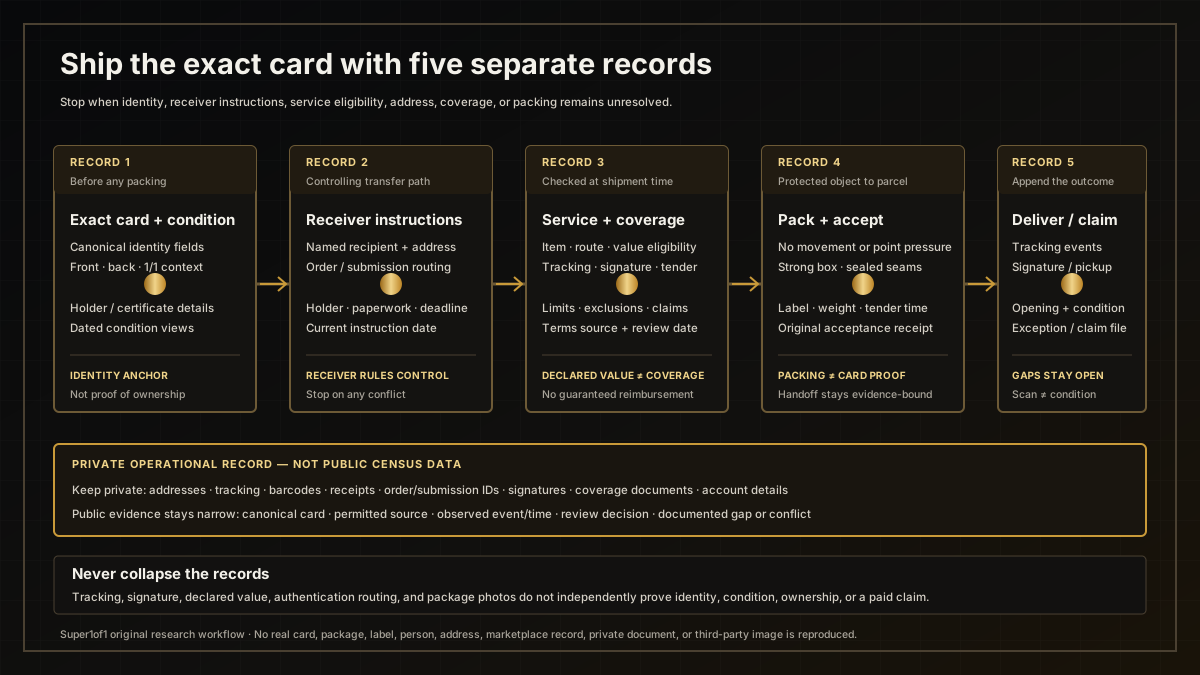
Five records to complete before the card leaves your control
| Record | What to preserve privately | What it does not establish alone |
|---|---|---|
| 1. Exact card and condition | Canonical identity fields, full front and back, 1/1 marking, holder or certificate details, and dated condition views | Legal ownership, carrier coverage, or what will arrive. |
| 2. Transfer instructions | Controlling order or submission number, named recipient, exact address supplied by that workflow, routing deadline, and current receiver instructions | That a different address, holder, or service remains eligible. |
| 3. Service and coverage | Carrier, service level, acceptance limits, exclusions, declared-value or coverage terms, tracking, signature, claim window, and review date | That declaring a value creates insurance or guarantees a paid claim. |
| 4. Packing and acceptance | Protective layers, movement test, sealed parcel, label, weight, tender time, location, and acceptance receipt | The identity or condition of the card after handoff. |
| 5. Delivery or exception | Tracking events, signature or pickup evidence when applicable, recipient confirmation, opening record, damage record, and claim correspondence | An uninterrupted custody chain, authenticity, or condition when delivered. |
Receiver instructions control the inner package
Do not assume one holder works for every destination. A buyer, marketplace authenticator, grader, auction house, consignor, vault, or insurer may specify a recipient, card holder, order paperwork, barcode, packing sequence, or prohibited material. Follow the current instructions attached to the actual transaction and stop if they conflict with the label or order.
For example, PSA's current shipping guide instructs submitters to use a protective sleeve and flexible semi-rigid holder, prevent movement, use a new box with void fill, and seal the package securely. CGC's current card-shipping instructions similarly specify protective sleeves, semi-rigid holders, larger cardboard supports, and a sturdy box. Those are receiver-specific submission examples—not universal instructions to remove a valuable card from an existing holder or to ignore another recipient's written requirements.
Pack against movement, pressure, moisture, and sorting impacts
- Prepare a clean, dry workspace. Wash and dry hands, clear liquids and loose debris, and do not clean, press, flatten, repair, or otherwise modify the card. Use the Superfractor evidence-photo checklist before the card is enclosed.
- Use the required or suitable primary holder. Confirm the card cannot slide out and that closures, tape, clips, or tight supports cannot contact, bend, indent, or abrade it. Do not change an existing sealed or certified holder unless the controlling receiver expressly requires and accepts that change.
- Contain the holder. Where compatible with the receiver's rules, use a clean secondary enclosure to reduce moisture and accidental opening risk. Keep labels and adhesive away from the card and holder surfaces that matter.
- Immobilize without crushing. Support the protected holder evenly, avoid point pressure, and perform a gentle movement check before sealing. The package should not rattle or allow the card assembly to strike the outer walls.
- Use a strong outer box. USPS's current package-preparation guidance calls for a sturdy box, cushioning that prevents shifting, and secure packing tape across seams. Reused packaging is acceptable only when it remains structurally sound and all unrelated labels and markings are removed or covered as the carrier requires.
- Document the layers privately. Record enough to reconstruct what was packed and how, but keep the address, barcode, tracking number, account details, and security information out of public photos and census submissions.
Choose the service from current written terms
“Tracked,” “signature required,” “declared value,” and “insured” are not interchangeable. Before purchase, check whether the carrier and exact service accept the item, origin, destination, packaging, and proposed value; who can buy coverage; what exclusions, limits, documentation, signature, and tender rules apply; and how loss or damage claims are filed. Save the applicable terms or dated links that the provider permits you to retain.
If a marketplace or authenticator controls the shipment, use its generated address, label, and required path. eBay's current Authenticity Guarantee seller guidance illustrates a seller-to-authenticator route with eligibility and shipping requirements. Its Money Back Guarantee policy also describes delivery evidence such as integrated tracking, a delivery scan, address matching, and signature confirmation where required. Reopen the live order and policy: eligibility, thresholds, routing, and evidence rules can change.
Stop before tender if any of these remain unresolved
- The label recipient or address differs from the controlling order or submission workflow.
- The receiver's required holder or paperwork conflicts with the planned package.
- The exact service does not clearly accept the item, route, value, or coverage request.
- The card can move, the holder can open, or pressure reaches the card assembly.
- The value, identity, and condition records needed for a potential claim are incomplete.
- A marketplace, grader, carrier, or insurer requires a different tender or acceptance process.
Create a custody record at acceptance and delivery
- Before tender: verify the sealed parcel, label, weight, recipient, service, tracking, and signature selection against the controlling record.
- At tender: use the acceptance method required for that service and preserve the original mailing or acceptance receipt. A label purchase alone may not prove possession changed.
- In transit: monitor through the provider's permitted interface. Record exceptions privately and use the provider's current process; do not publish tracking or recipient details.
- At delivery: preserve the delivery event and any required signature or pickup record. The receiver should inspect the unopened parcel and preserve the packaging if identity, condition, or damage is disputed.
- After receipt: append the supported shipment and receipt events to the private sports-card provenance ledger. Do not claim an unbroken chain where the evidence has a gap.
Preserve claim evidence without predicting the outcome
USPS's current domestic claims guidance identifies the original mailing receipt, proof of insurance, proof of value, and proof of damage as claim materials and notes that photos can help. Other carriers, marketplaces, graders, and insurers use their own current rules, deadlines, exclusions, inspection requirements, and appeal paths.
Keep the card, holder, inner and outer packaging, labels, receipts, order records, pre-shipment condition evidence, delivery or exception record, and permitted correspondence until the applicable claim or dispute period is over. Do not repair, discard, reship, or publicly disclose the evidence while the controlling provider requires inspection or preservation. A complete file improves reviewability; it does not guarantee eligibility or reimbursement.
Keep the shipment private and the census narrow
Addresses, tracking numbers, order and submission numbers, receipts, coverage documents, signatures, private messages, phone numbers, email addresses, account identifiers, and present-location details are private operational records. Redact them before sharing any permitted image. Super1of1 does not need them to document a card publicly.
A shipping record does not create a canonical card, prove ownership, authenticate the object, establish value, or change seen coverage by itself. Seen coverage changes when an accepted public sighting matches an existing published Superfractor identity. Fresh marketplace observations are one permitted sighting source, while shipping and private custody records remain separate.
Reusable private Superfractor shipment record
Complete this before tender and append outcomes instead of rewriting the original plan.
Canonical card identity and 1/1 details:
Pre-shipment holder and condition record:
Transfer purpose / controlling order or submission:
Named receiver and instructions reviewed on:
Required holder / paperwork / routing:
Carrier and exact service:
Acceptance, item, route, and value eligibility checked:
Declared value / coverage terms / exclusions reviewed:
Tracking / signature / delivery requirements:
Packing layers and movement check:
Sealed parcel / label / weight record:
Tender method / time / acceptance receipt:
Transit exceptions:
Delivery / signature / pickup event:
Receiver opening / condition comparison:
Loss, damage, return, or claim evidence preserved:
Private details excluded from public evidence:
Unresolved gaps / append-only correction:
Source review and limits
This guide was reviewed against current USPS, PSA, CGC, and eBay pages available on 2026-07-16. Provider examples explain why live, receiver-specific terms control; they are not endorsements, affiliate offers, or promises about eligibility, safety, coverage, authentication, delivery, or claims. Reopen every controlling order, receiver, marketplace, carrier, grading, insurance, and claims term at shipment time.
Super1of1 does not pack, ship, insure, store, authenticate, grade, appraise, broker, monitor, recover, or accept custody of cards; verify addresses or counterparties; resolve claims; or provide legal, tax, insurance, carrier, marketplace, grading, buying, or selling advice. Use the buyer checklist or seller worksheet for the surrounding transaction. The canonical census remains limited to true Topps and Bowman baseball Superfractors from 2024 onward.