How to Buy a Superfractor Safely: Buyer Checklist
Verify a Superfractor 1/1 before buying or posting a bounty: check exact identity, original images, seller authority, payment protection, and custody.
There is no risk-free way to buy a Superfractor. A one-of-one stamp can be misidentified, the physical card can differ from the listing, a real certification number can be copied, and transaction protections can have eligibility rules, exclusions, and short deadlines. A careful buyer verifies the exact card, the actual object, the written transaction path, and the custody plan as separate questions before committing funds.
Quick answer
Resolve the exact Superfractor identity from official product sources; inspect current original front, back, serial-number, condition, and holder details; compare price evidence without treating an asking price as a sale; check the live protection, authentication, return, payment, and delivery terms for the exact transaction; and keep communication and payment inside any marketplace workflow whose protections you intend to use. Stop when a material identity, condition, custody, or policy question cannot be resolved.
Nine gates before buying a Superfractor
| Gate | Evidence to review | Stop when |
|---|---|---|
| 1. Exact identity | Year, manufacturer, product, edition, set or subset, card number, subject, autograph, relic, variation, official Superfractor eligibility, and 1/1 marking | The seller title, grading label, or visual pattern is being used to fill an official-source gap. |
| 2. Actual object | Current original full-front, full-back, serial, card-number, holder, and identity-changing detail images | The media is copied, inconsistent, too incomplete to distinguish the card, or cannot be connected to the offered object. |
| 3. Condition | Neutral-light views and a written description of corners, edges, surface, centering, print issues, alterations, holder damage, and disclosed defects | A material flaw is hidden, disputed, or described differently across the listing and current media. |
| 4. Certification | Provider certificate record, label data, available provider images, holder features, and the physical card shown | Only the certification number matches or the provider record conflicts with the offered card or holder. |
| 5. Price basis | Dated completed transactions and disclosed identity, condition, grade, format, fee, and timing differences | An active ask, price guide, population count, or unrelated player card is presented as exact value proof. |
| 6. Counterparty and terms | The named seller or consignor, public transaction history where available, actual possession or authorized custody, written return terms, and who is responsible at each step | The person taking payment cannot explain who holds the card, who can sell it, or what written terms control. |
| 7. Protection scope | Current item eligibility, authentication scope, payment requirements, exclusions, deadlines, return rules, dispute process, and final-sale conditions | A badge, slogan, or payment method is treated as unconditional protection. |
| 8. Permitted payment path | The checkout, invoice, auction, dealer, or in-person workflow that the governing terms permit | A party asks you to leave a marketplace, misstate the item, split payment, or use a method that removes the protection you expected. |
| 9. Custody and receipt | Ship-to party, authenticator or vault route, tracking, signature, insurance or declared-value rules, delivery inspection, and required evidence | The route changes without written confirmation or you cannot meet the applicable inspection and claim deadlines. |
Four records before money moves
The nine gates resolve into four records that should agree before a price decision: the official card identity, current evidence of the offered object, the written transaction and protection path, and the custody and receipt plan. A badge, certificate number, photograph, seller rating, or fresh marketplace observation can inform one record without completing the others.
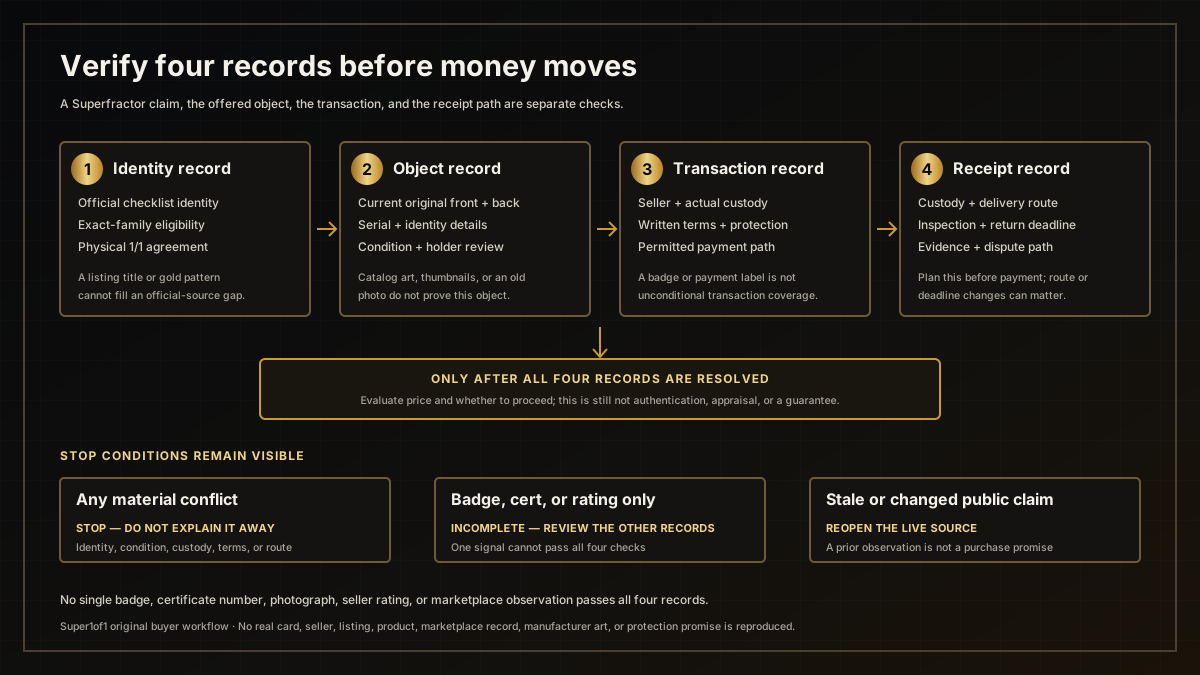
Verify the card before evaluating the deal
Topps defines a Superfractor as the one-copy Refractor parallel of a given card. “Given card” is the controlling unit. A player can have separate base, autograph, insert, relic, rookie, prospect, and variation Superfractors in one release, and a gold one-of-one can belong to another named parallel.
Use the exact identity worksheet with the official Topps checklist library and the applicable official odds or product documentation. Record every identity-changing field and require explicit Superfractor eligibility for that family. If the official sources are incomplete or conflict with the card, keep the result unresolved instead of borrowing the nearest listing identity.
Inspect the offered object, not a catalog example
Ask through the permitted transaction channel for current original media sufficient to distinguish the offered card: full front and back, the 1/1 marking, card number, autograph or relic language, visible condition, and the complete holder and label when graded. A reasonable detail request is about the object; it does not require a home address, government ID, private account record, or other unnecessary personal data.
Compare the current media with every listing statement and any earlier public image. A reused background is not proof of fraud, and a different angle is not proof of substitution. Treat unexplained differences in serial placement, card number, subject, autograph, relic, surface, damage, holder, or label as questions that must be resolved before payment.
Minimum pre-purchase image review
- Full front and back, square enough to read the printed identity.
- Close view of the 1/1 marking and any autograph, relic, variation, rookie, or prospect designation.
- Neutral-light views of corners, edges, surface, print issues, and disclosed damage.
- Complete holder, label, certification number, seams, and visible security features when graded.
- No reliance on a manufacturer image, grading-company catalog image, marketplace thumbnail, or another seller's photograph as proof of the offered object.
Read grading and certification evidence narrowly
A grading certificate can corroborate a provider's record for a submitted card; it is not a universal guarantee about every online object displaying that number. PSA's current certificate-verification page warns that valid public certification numbers can be reused on counterfeit grading inserts and that database verification does not eliminate risk. Compare the card, label, holder, and any provider image—not the number alone.
Raw, graded, authenticated, and marketplace-inspected describe different review states. A grader's label does not replace the manufacturer checklist, a condition grade does not establish value, and a marketplace inspection may have a narrower scope than grading or autograph authentication. Use the grading worksheet to separate those claims.
Check protection eligibility for this transaction
The Federal Trade Commission's current online-marketplace guidance recommends checking the marketplace and seller, examining actual-item photos, reviewing written terms and return policies, using a safer permitted payment method, and tracking deadlines. Those are general consumer checks, not proof that a particular card, seller, or transaction is safe.
Protection depends on the actual item, category, price, locations, payment, delivery, return, and timing rules—not the general reputation of a platform. As one current example, eBay's Authenticity Guarantee for trading cards applies only to eligible listings, inspects the card or sealed holder against the listing, and does not include grading or re-grading. Its current terms also limit what the inspection says about certain autographs, patches, and relics.
That service is not a Super1of1 endorsement, a universal card-authentication standard, or a substitute for reading the exact listing. eBay's Money Back Guarantee policy contains item, payment, return, forwarding, condition, deadline, and final-sale rules, including special rules for trading cards and authenticated items. Reopen the current policy immediately before purchase and preserve the order record.
Keep the purchase inside its permitted path
If a marketplace introduced the transaction, use its permitted communication, offer, checkout, payment, authentication, and delivery workflow when you intend to rely on its protections. eBay's current off-platform transaction policy prohibits moving an eBay purchase outside eBay and states that outside transactions are not eligible for its protection programs.
A private dealer, auction house, show, or direct collector transaction has its own written terms and may not provide the same protections. Verify the legal seller, actual custody, inspection opportunity, invoice description, payment finality, return rights, taxes, delivery, loss allocation, and dispute path for that specific transaction. Do not assume that “escrow,” “insured,” “authenticated,” “friends and family,” “wire,” or “final sale” has one universal effect; use only a lawful service you independently verify and whose current terms fit the transaction.
How to post a Superfractor bounty or wanted notice safely
A collector “bounty” is an informal wanted notice or conditional reward, not a Topps card attribute, proof that the card has surfaced, or a purchase agreement. Keep the locating request, any reward terms, the offered card's verification, and the eventual purchase as four separate records. Super1of1 does not host or enforce bounties, identify private owners, pass messages, or broker the resulting transaction.
Read the destination community's current rules before posting. Do not copy another collector's image, imply that a person owns the card, publish private contact or location details, recruit others to pressure an alleged holder, or repeat an unverified theft or fraud claim. If a lead comes from a marketplace, continue through that marketplace's permitted workflow; a public wanted post does not override its communication, payment, or off-platform rules. The Federal Trade Commission's online-marketplace guidance also recommends checking the item and seller, reading current protections and return terms, using a safer permitted payment method, and retaining written records.
| Wanted-notice field | What to state | What not to infer or expose |
|---|---|---|
| Exact target | Year, product, edition, set or subset, card number, complete subject list, attributes, official Superfractor eligibility, and 1/1 print run | That a visually similar gold card, another 1/1, or a seller title is the target. |
| Meaning of “found” | Whether a qualifying lead means a permitted public source, current original media from an authorized seller, or a completed verified transaction | That a link, screenshot, old listing, or secondhand ownership claim proves current possession or authority to sell. |
| Notice window | Publication date, closing date and time zone, correction method, and an explicit closed status when the search ends | That an old notice, reward, offer, or contact route remains active indefinitely. |
| Reply route | One venue-permitted account or organization channel and only the information needed to evaluate the lead | A home address, phone number, account credential, payment detail, private collection location, or alleged owner's identity. |
| Reward boundary | Any independently reviewed eligibility, exclusions, exact trigger, timing, and lawful payment terms kept separate from the card price | That a finder earns payment for an unverified link, must pay an advance fee, or can bind an owner to sell. |
| Purchase boundary | A new identity, object, seller-authority, protection, payment, custody, and receipt review under the actual transaction terms | That paying a reward purchases the card, verifies ownership, preserves platform protection, or guarantees delivery. |
Reusable Superfractor wanted-notice boundary
Publish only the minimum public fields allowed by the chosen venue. Keep legal, tax, payment, contact, and transaction details private.
Exact target identity:
Official checklist and Superfractor eligibility sources:
Notice publication date / venue / current rules reviewed:
What qualifies as a lead:
What does not qualify:
Notice closing date / time zone:
Permitted reply route:
Reward offered: no / independently reviewed terms retained privately
Exact reward trigger and exclusions:
No advance payment or fee required from a finder or seller:
Card purchase handled as a separate verified transaction:
Private owner, location, account, payment, and security data excluded:
Image and source-use permissions checked:
Correction / closure statement:
A public notice is a locating request only. It does not establish the card's public-evidence status, current owner, location, availability, condition, authenticity, price, or pack state.
A wanted notice never changes the Super1of1 census. Only a reviewed official source can establish the expected card identity; seen coverage changes only when an accepted public sighting matches that exact identity. Use the public-evidence guide before describing whether a copy has surfaced, and restart all nine buyer gates if a possible seller responds.
Plan receipt before sending payment
- Map custody. Record who holds the card now and whether it will move through a seller, consignor, authenticator, vault, carrier, dealer, or pickup location before reaching you.
- Confirm the destination and delivery requirements. Use the address inside the controlling order workflow, understand any signature or pickup rule, and do not redirect the parcel if that would change coverage.
- Preserve the pre-purchase record. Keep the listing, original media provided to you, written description, questions and answers, invoice, payment confirmation, and policy versions allowed by the service.
- Inspect promptly and conservatively. Record the unopened parcel and opening process if useful, compare the received card with the order before removing protected packaging, and do not clean, alter, crack, or reship it while a discrepancy is being evaluated.
- Use the written dispute path on time. If identity, condition, authenticity, damage, or delivery differs, follow the governing service's current instructions and deadlines. Preserve the card, holder, packaging, and transaction record.
Marketplace observations are research leads, not purchase guarantees
A fresh marketplace observation on Super1of1 is an accepted public sighting from a permitted source. An exact match contributes to seen coverage, while an unmatched accepted item remains a provisional observed card. Neither result creates a checklist identity, proves ownership, verifies a seller, guarantees that a listing remains live, or promises that the received object matches the observation. Reopen the source and do the full buyer review at decision time.
A public sighting timeline can document that an exact Superfractor appeared publicly at a stated time. It does not reveal the present owner, current condition, authority to sell, or transaction terms. Use the public-sighting guide before converting any sighting into a custody claim.
Reusable Superfractor buyer record
Keep this private by default. Record URLs and review dates because listings and policies change.
Exact identity and Superfractor eligibility:
Decision date:
Seller / consignor / auction / marketplace:
Who currently holds the card and authority stated:
Current original media reviewed:
1/1, card number, subject, and identity details matched:
Condition, alteration, holder, or label concerns:
Certificate record and provider images reviewed:
Completed-sale evidence / value range / confidence:
Listing description and answers retained:
Authentication or inspection scope:
Payment, return, dispute, and final-sale terms:
Protection eligibility / exclusions / deadlines:
Custody, shipping, tracking, signature, and receipt plan:
Personal data excluded from public evidence:
Decision / stop reason / unresolved questions:
Source review and Super1of1 boundaries
This checklist was reviewed against current Topps, eBay, PSA, and Federal Trade Commission pages available on 2026-07-16. The eBay examples show why a buyer must read live provider-specific terms; they are not marketplace recommendations or affiliate offers. Reopen every manufacturer, marketplace, auction, grading, payment, carrier, insurance, vault, and seller term that applies to the actual transaction.
Super1of1 does not authenticate cards, verify sellers or ownership, inspect listings, hold funds, provide escrow, accept custody, broker purchases, arrange shipping or insurance, resolve disputes, guarantee transactions, or provide legal, tax, insurance, investment, grading, shipping, buying, or selling advice. Use the valuation worksheet for price evidence, build the delivery record with the Superfractor shipping and custody guide, and walk away when the available evidence does not support the identity or transaction you are being asked to accept. The canonical census remains limited to true Topps and Bowman baseball Superfractors from 2024 onward.