How to Photograph a Superfractor: Evidence Photo Checklist
Photograph a Superfractor 1/1 with complete front, back, serial, finish, and condition views while preserving originals and private details.
A useful Superfractor photograph is not merely a bright picture of a gold card. It is a deliberately ordered record that lets another person read the exact checklist identity, see the 1/1 claim in context, compare the reflective finish from more than one angle, and identify condition or labeling conflicts without exposing the collector's private life.
Quick answer
Make two complete passes before sharing anything: a face-on record for readable identity and condition fields, then an off-axis light record for the reflective pattern. Keep the card in its existing safe holder, retain the untouched original files, and publish only copies that exclude addresses, account screens, redemption codes, payment records, tracking numbers, and precise location data. A photo can document what the pictured object shows; it cannot establish the official checklist, manufactured copy count, authenticity, ownership, or present custody by itself.
What a Superfractor photo can and cannot prove
| Visible signal | What the image may support | What still needs separate evidence |
|---|---|---|
| Complete front and back | The pictured design, printed fields, card number, subject, and apparent physical state at capture | The official release, checklist family, parallel eligibility, and whether the object is authentic |
| 1/1 marking in surrounding context | That the pictured object displays a one-of-one claim in that location | That the claim belongs to the intended card, names a Superfractor, or represents the only manufactured copy |
| Reflective pattern from several angles | How the finish responds to changing light and whether a cropped glare patch hid a relevant field | The official parallel name; several Refractor and one-of-one treatments can look similar |
| Holder label and certification number | The description printed on the pictured holder and a key for checking the provider's current public record | That every online use of the number pictures the same object, or that the official product sources agree |
| Dated photo or ownership note | A dated claim that can be reviewed with its source and file history | Identity, uninterrupted custody, present location, ownership rights, or permission to publish personal details |
Resolve the official identity first with the Superfractor identity worksheet. Photos corroborate visible fields; they do not replace the release checklist and the applicable official odds or product documentation.
The ten-view Superfractor evidence sequence
Use the same safe setup for every view. Do not remove a card from a fitted holder, open a graded holder, peel a label, clean a surface, or handle a raw card more than necessary just to improve a photograph.
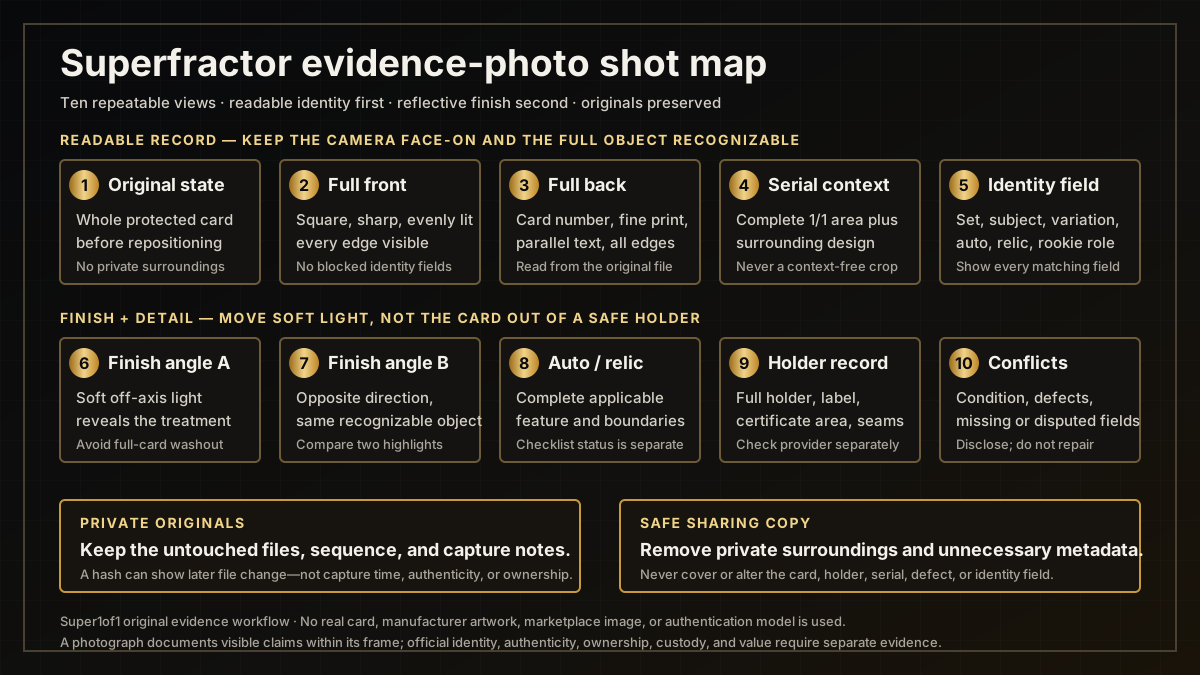
| View | Capture | Acceptance check |
|---|---|---|
| 1. Original state | The whole protected card before repositioning, without shipping labels or private surroundings | The holder and card are fully inside the frame; no claim is made about where the photo was taken. |
| 2. Full front | Face-on, centered, sharp, and evenly lit with every edge and corner visible | No glare, crop, finger, stand, or reflection hides the subject, logos, autograph, relic, or border. |
| 3. Full back | Face-on with the complete back, copyright line, card number, printed parallel text, and edges visible | Small text is readable in the original file rather than inferred from a similar card. |
| 4. Serial context | A close view of the entire 1/1 area plus enough surrounding design to locate it on this card | The marking is not isolated into a context-free crop or obscured by a holder reflection. |
| 5. Identity field | Card number, set or subset wording, subject, and any variation, autograph, relic, or rookie identifiers | Every identity-changing field used in the proposed match is visible somewhere in the set. |
| 6. Finish angle A | A slight off-axis view under soft light that reveals the reflective or patterned treatment | The light shows finish rather than washing out the entire card. |
| 7. Finish angle B | A second angle from the opposite direction with the card still fully recognizable | A pattern seen in one highlight can be compared against a separate lighting angle. |
| 8. Autograph or relic detail | The complete autograph, sticker boundary, relic window, inscription, or other applicable feature | The detail is not mistaken for manufacturer-issued status without matching checklist evidence. |
| 9. Holder record | For a graded card, the complete holder front and back plus a readable label and certificate area | The public certification record can be checked separately; the number is not treated as self-authenticating. |
| 10. Conflicts and condition | Separate honest close views of damage, print lines, dimples, altered labels, missing serials, or other disputed fields | Nothing relevant is hidden by selective angles, edits, filters, or an AI-generated background. |
Use two lighting passes, not one dramatic photo
- Stabilize the camera and card. Use a steady surface, a timer if helpful, and a plain uncluttered background. Do not balance a valuable card where it can fall.
- Record the readable pass. Keep the camera square to the card and use broad, soft light from the side. Avoid flash and harsh overhead reflections that hide serial or condition fields.
- Record the finish pass. Move the light or camera slightly off-axis while keeping the complete object recognizable. Capture both directions; one highlight is not a finish inventory.
- Review at full size. Confirm focus on the card rather than the holder surface, check small back text, and retake any view with a blocked field.
- Stop before intervention. Never polish, press, flatten, recolor, sharpen into invented detail, or open a holder to make the object look easier to classify.
eBay's current official listing-photo guidance, reviewed on 2026-07-16, similarly recommends clear high-resolution views, an uncluttered background, several angles, and reduced glare without flash or overhead lighting. A qualifying listing counts as a public sighting, while these marketplace rules do not define an official checklist identity.
Preserve the original and make a safe sharing copy
- Keep the untouched capture. Preserve the original file, resolution, and sequence privately. Do not overwrite it with a crop, filter, markup, or background replacement.
- Create a derivative for sharing. Crop irrelevant surroundings and visibly redact private information on a copy only. Never cover or alter the card, holder, serial, label, defect, or identity field being evaluated.
- Use neutral filenames. A sequence such as
front-full,back-full,serial-context, andfinish-angle-ais useful. Do not put an address, phone number, account name, purchase amount, or precise location in a filename. - Record time separately. Note the capture date, time zone, photographer or source role, and which files are originals. A file timestamp or handwritten date is supporting context, not proof of identity or ownership.
- Optional integrity record. A file hash recorded after capture can later show whether that exact file changed after hashing. It cannot prove when the image was made, what happened outside the frame, or whether the pictured object is authentic.
Keep private data out of the public evidence set
| Keep private | Safer public substitute |
|---|---|
| Home or return address, shipping label, tracking barcode, or precise current location | The card-only view and a broad source role such as collector-supplied, when authorized |
| Redemption PIN, covered code, account screen, password, recovery information, or support transcript | The completed physical card after fulfillment, or a narrow statement that fulfillment remains unresolved |
| Receipt number, payment details, tax record, private message, buyer or seller identity | A public source URL when permitted, or a moderator-reviewed private submission limited to necessary fields |
| Faces, reflections, family photographs, badges, keys, mail, or unrelated certificates in the background | A neutral reshoot; if that is impossible, an obvious redaction on the sharing copy while retaining the original privately |
| Embedded location metadata | A public copy with unnecessary metadata removed, while the untouched original remains private under the collector's control |
Match the photo set to its purpose
| Purpose | Minimum useful record | Boundary |
|---|---|---|
| Super1of1 collector-source review | Exact canonical card, complete front and back, 1/1 context, identity-changing fields, source date, and publication permission | Moderation decides whether the source is exact, lawful to use, and suitable for public display; submission does not guarantee acceptance. |
| Manufacturer defect request | The provider's current requested views and purchase or product trail kept in its private process | Topps's current product-defect instructions, reviewed on 2026-07-16, describe current-year eligibility, manufacturing issues such as printing errors, creases, or warping, and provider-controlled review. Reopen the current instructions for required materials before submitting; eligibility and remedies remain Topps's decision. |
| Marketplace listing | Current original views of the actual item, condition, flaws, and the platform's required listing fields | Follow the current platform rules. eBay's picture policy rejects inaccurate representation and certain edited or stock-image uses. A qualifying official-API listing counts as a public sighting; its provider-controlled fields expire. |
| Private collection, insurance, or custody record | Identity, original image set, acquisition and condition records, storage or custody history, and provider-specific requirements | Keep sensitive records private and obtain current guidance from the applicable insurer, custodian, tax professional, or legal adviser. Super1of1 does not determine coverage or ownership. |
Reusable Superfractor photo manifest
Keep this beside the original files. Unknown fields remain unresolved, and private fields are excluded from any public copy.
Canonical card URL or proposed exact identity:
Capture date / time zone:
Photographer or public-source role:
Permission and intended use:
Original files retained privately:
Full front filename:
Full back filename:
Serial-context filename:
Identity-field filename:
Finish angle A / B filenames:
Autograph, relic, variation, or holder filenames:
Condition or conflict filenames:
Official checklist and eligibility sources checked:
Visible fields that agree:
Visible conflicts or obscured fields:
Edits made only to the sharing copies:
Private data removed from sharing copies:
What the photo set supports:
What remains unresolved:
Submit evidence without turning a photo into a larger claim
Start from an exact published card when possible, then submit a checkable source or authorized image for moderation. Describe what is visible, when it was observed, and which identity fields agree. Do not claim authenticity, current ownership, pack location, copy count, value, or a completed transaction unless separate evidence actually supports that narrower statement.
Read the census evidence methodology and the guide to what public evidence can prove. If the card was just pulled, stabilize it with the first-hour checklist before taking more views. The buyer checklist and sale worksheet apply separate transaction rules; this photo checklist does not authenticate, appraise, insure, grade, sell, or take custody of a card.